Cleanse & Exfoliate
 Serum & Treatments
 Moisturizing & Creams
 Masks & Peels
 Suncare

 Shampoo & Conditioner
 Hair Masks
 Scalp Care
 Hair Oil
 Hair Creams
 Hair Serums
 Gels & Waxes
 Heat Protection

 Body Wash
 Body Lotion
 Body Oil
 Body Scrub
 Hand & Foot Care
 Intimate Care
 Oral Care
 Deodorants

 Face
 Lips
 Eyes
 Makeup Tools
 Foundation
 Blush
 Mascara
 Lipstick

 Electrical
 Bath Loofahs
 Face Brushes
 Hair Brushes & Combs

 Skin Care Sets
 Hair Care Sets

 Korean Skin Care
 Korean Makeup
 Korean Hair Care
When reading the ingredients in a vitamin C serum, you may notice different names, such as L-Ascorbic Acid, Ascorbyl Glucoside, and Sodium Ascorbyl Phosphate. Although they are all associated with vitamin C, they are not identical in structure, stability, or how they are used in skincare products.
Understanding these differences can help you read a product label more effectively instead of choosing a product based only on its percentage or the words “vitamin C.” In this guide, we review the most common derivatives and their key differences, explaining what you can learn from the ingredient list and what requires additional information about the product formulation.
Discover more skincare tips at Dar Beauty.
Article Summary
Vitamin C derivatives for skin differ in structure, stability, and use characteristics. Some of the most common are L-Ascorbic Acid, Ascorbyl Glucoside, and Sodium Ascorbyl Phosphate. No single derivative is best for all skin types, so your choice depends on the product formulation, your skincare goals, and how well your skin tolerates it.
What Are Vitamin C Derivatives for Skin?
Vitamin C, also known as ascorbic acid, is an antioxidant used in skincare products. It is available in multiple forms and derivatives to create formulations with different stability, solubility, and use characteristics.
L-Ascorbic Acid is the pure form of vitamin C, while other derivatives result from chemical modifications to the molecule’s structure. These modifications may improve certain formulation properties, but they don’t automatically mean the derivative is more effective or gentler for all skin types.
Potential results depend on several factors, including the type of derivative, its concentration, the product formulation, pH, stability, and how the ingredient is delivered to the skin. So simply reading the derivative’s name isn’t enough to assess product quality.
The Most Common Types of Vitamin C Used in Skincare
1. L-Ascorbic Acid
L-Ascorbic Acid is known as the pure form of vitamin C and features prominently in research on topical skincare. It is used in formulations designed to support antioxidant protection and improve the appearance of uneven skin tone and signs of aging caused by environmental exposure.
One of its main challenges is that it is sensitive to oxidation, and its effectiveness is also linked to formulation properties, including pH and stability. Commercial products use different concentrations and pH levels, so you shouldn’t assume that every product containing this ingredient will deliver the same results.
2. Ascorbyl Glucoside
Ascorbyl Glucoside is a vitamin C derivative bound to glucose, used in skincare products targeting dullness and uneven skin tone. It differs from pure ascorbic acid in its structure and properties, and its performance depends on the product formulation and the skin's ability to benefit from the ingredient.
The presence of this derivative does not mean that the product is free of the possibility of irritation, and its effectiveness cannot be judged by its name alone; the other ingredients and how the product is used should also be taken into account.
3. Sodium Ascorbyl Phosphate
Sodium Ascorbyl Phosphate, commonly abbreviated as SAP, is a vitamin C derivative used in water-based formulations. This form was designed to help improve certain stability properties compared with pure ascorbic acid.
Available evidence on skin outcomes varies depending on the product type, its concentration, and how it was tested. Therefore, it is best not to consider SAP an equivalent substitute for L-Ascorbic Acid or assume that one always outperforms the other.
4. Magnesium Ascorbyl Phosphate
This derivative is commonly abbreviated as MAP and is used in skincare products, including some cream formulations. It is a derivative whose solubility and stability properties differ from those of pure ascorbic acid.
Results may vary depending on the final formulation, and the presence of MAP alone is not enough to predict how much the skin's appearance may improve or determine whether the product is suitable for sensitive skin.
5. 3-O-Ethyl Ascorbic Acid
3-O-Ethyl Ascorbic Acid, also known as Ethyl Ascorbic Acid on some ingredient lists, is a vitamin C derivative used in skincare products. It is used in formulations intended to support radiance and improve the appearance of uneven skin tone.
When reading the label, look for the ingredient's full name rather than relying only on the phrase “vitamin C.” The presence of this derivative alone does not guarantee that the product will remain stable throughout use or be effective; these properties are affected by the formulation, packaging, and storage conditions.
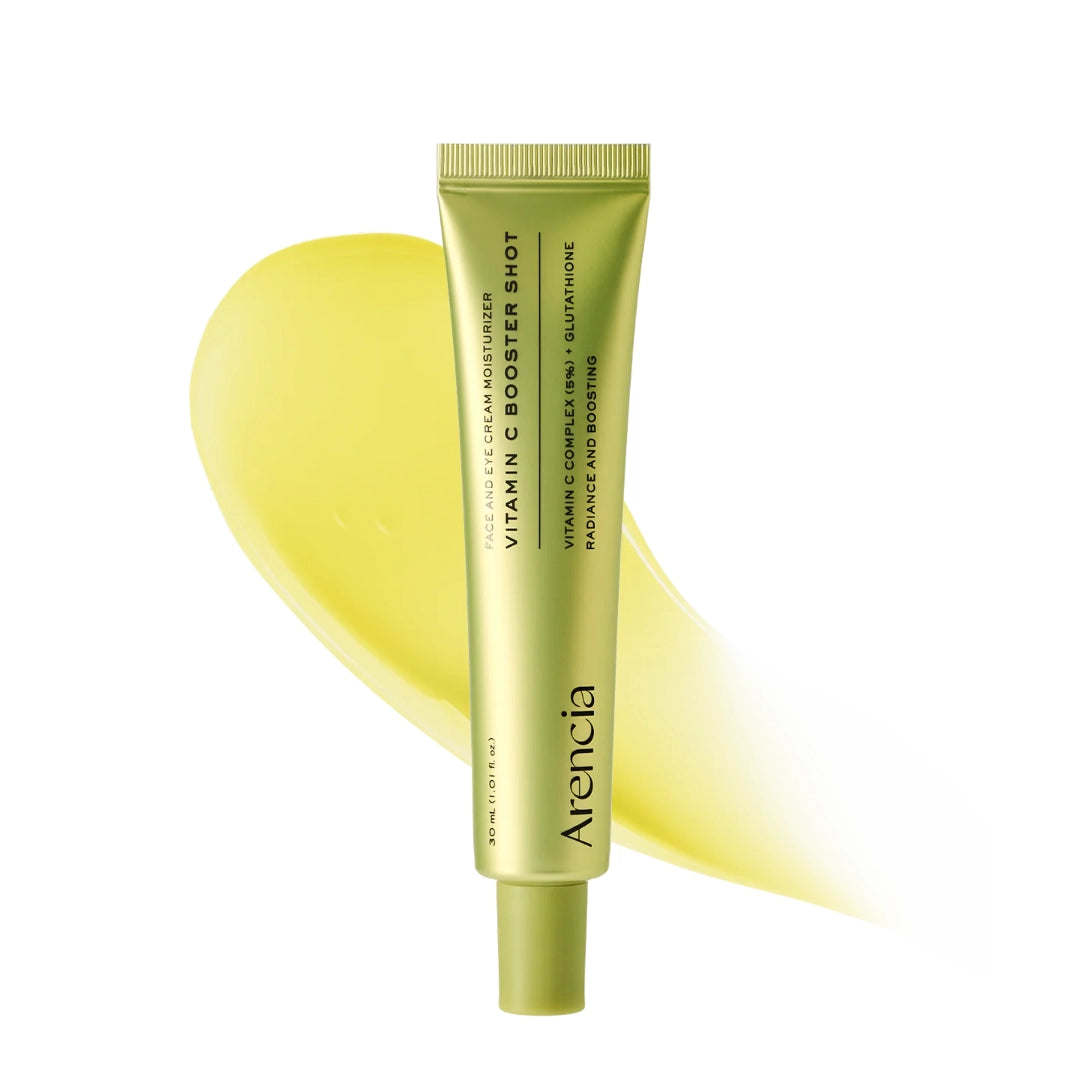
Example from Dar Beauty products: Arencia Vitamin C Booster Shot states that it contains 50,000 ppm (5%) 3-O-Ethyl Ascorbic Acid, along with pure vitamin C and other ingredients.

The Dr.Althea Gentle Vitamin C Serum page also mentions this derivative alongside 5% niacinamide and sea buckthorn water, but it does not specify the concentration of the vitamin C derivative itself.

These are examples of how formulations differ, not evidence on their own that one product is better than the other.
6. Tetrahexyldecyl Ascorbate
Tetrahexyldecyl Ascorbate, abbreviated as THDA, is an oil-soluble derivative used in some oil-based or oil-containing formulations. Its properties differ from those of water-soluble derivatives.
It should not be assumed to be the best choice for sensitive skin, or that its ability to dissolve in oil automatically means better results. Overall performance depends on the product formulation, the available evidence, and how it is used.
What is the difference between vitamin C derivatives?
The following table helps explain the general differences between the most common forms used in skincare products. It is a simplified reference, not a ranking from most to least effective.
| Type | General characteristic | What to look for |
|---|---|---|
| L-Ascorbic Acid | The pure form of vitamin C | pH, stability, and potential for irritation |
| Ascorbyl Glucoside | A glucose-linked derivative | The full formulation and product-specific evidence |
| Sodium Ascorbyl Phosphate | A derivative used in water-based formulations | Concentration, product formulation, and intended use |
| Magnesium Ascorbyl Phosphate | A derivative used in various formulations, including creams | Stability, formulation, and available evidence |
| 3-O-Ethyl Ascorbic Acid | A common derivative in products for radiance and uneven skin tone | Formulation and packaging quality, and storage conditions |
| Tetrahexyldecyl Ascorbate | Oil-soluble derivative | Formulation suitability and product-specific evidence |
This table alone cannot determine which derivative is best for all users. Research on vitamin C and its derivatives varies in design, formulations, and measured outcomes, and laboratory results do not necessarily mean the same results will be achieved when using a commercial product.
Since vitamin C is used in some routines for the appearance of spots, you can read Facial Pigmentation: Causes, Treatment, and Skincare to understand the different causes of pigmentation, or read the Guide to Kojic Acid for Skin to learn about another ingredient used in products targeting the appearance of dark spots.
How to read the name of a vitamin C derivative on the package?
“Vitamin C” may be prominently displayed on the front of the package, while the ingredient’s chemical name appears in the ingredients list. It’s therefore helpful to check the list rather than rely on the marketing name alone.
- Look for the ingredient’s English name, such as L-Ascorbic Acid or Ascorbyl Glucoside.
- Check the concentration if it’s clearly stated on the product.
- Read the full ingredient list, since the rest of the formulation affects the product’s properties.
- Pay attention to the packaging and storage instructions, especially for formulations that are sensitive to oxidation.
- Don’t compare the percentages of two different derivatives as though they were identical in composition or effectiveness.
If you’re comparing different products, check the ingredient list, stated concentrations, and usage and storage instructions. Use the differences outlined in this guide rather than relying on the marketing name alone.
How do you choose the right vitamin C formulation for your skin?
There’s no one rule that works for everyone, but you can use the following points when comparing products:
Define your goal
Are you looking to support radiance, improve the appearance of uneven skin tone, or add an antioxidant to your skincare routine? Defining your goal can help you compare products based on the available information, rather than choosing one based on the ingredient name alone.
Consider your skin’s tolerance
Some formulations may cause stinging or redness, especially if your skin is sensitive or its barrier is compromised. Start by following the product instructions, and patch test on a small area if needed. If irritation persists, stop using the product and seek medical advice if necessary.
Don’t rely on concentration alone
The percentage isn’t the only measure of a product; the derivative used, pH, stability, other ingredients, and packaging all affect the formulation’s properties. A higher concentration doesn’t necessarily mean better or faster results.
Compare the full formulation, not the marketing name
For example, Numbuzin No.5+ Vitamin Concentrated Serum contains multiple ingredients that target the appearance of pigmentation, including niacinamide, tranexamic acid, and alpha arbutin. Its ingredient list also states that it contains 3-O-Ethyl Ascorbic Acid at 2,000 parts per million (0.2%). So it’s a good example of a multi-ingredient formulation, rather than a product that relies on a vitamin C derivative alone.
If you’d like to compare other options, you can browse Dar Beauty’s serums and treatments collection, reviewing each product’s ingredient list and stated concentrations. Since product availability may vary by market, check the product page before making a purchase decision.
Common mistakes when choosing vitamin C
- The belief that all derivatives are identical: Derivatives differ in their composition and properties, and one cannot be substituted for another without considering the formulation.
- Choosing based only on the highest concentration: Concentration alone does not determine effectiveness or tolerance.
- Assuming “derivative” means gentle: No derivative alone guarantees that a product will not cause irritation.
- Ignoring storage instructions: Some formulations may be affected by light, air, and heat.
- Expecting immediate results: Results vary depending on the product, goal, and consistent use, and no single timeline can be guaranteed for everyone.
If your goal is to improve the appearance of pigmentation or dullness, remember that vitamin C is not a substitute for daily sun protection. You can explore Dar Beauty’s sun protection collection to review the available sunscreen options.
Frequently asked questions about vitamin C derivatives
Is pure vitamin C better than derivatives?
There is no single answer that applies to all products. L-Ascorbic Acid has significant clinical evidence behind it, but its stability and formulation can pose challenges. Derivatives vary in their properties and in the available evidence. The result depends on the overall formulation and the intended use.
Are vitamin C derivatives suitable for sensitive skin?
Some skin types may tolerate one formulation better than another, but this cannot be guaranteed based on the derivative name alone. Consider the other ingredients, start cautiously, and stop using the product if persistent irritation occurs.
Does a higher concentration mean better results?
Not necessarily. Results depend on the derivative, formulation, stability, and individual tolerance. A higher concentration may increase the risk of irritation with some products without guaranteeing a proportionate improvement in results.
Can I use vitamin C in the morning?
Many vitamin C products can be used in the morning if the product instructions allow it. Using broad-spectrum sunscreen remains an important step in your daytime routine, because vitamin C does not replace sunscreen.
How can I tell which type of vitamin C is in a serum?
Check the ingredient list on the packaging or product page, and look for the derivative’s chemical name. If the information isn’t clear, don’t assume the ingredient type or concentration based only on the marketing image.
Bottom line
Vitamin C derivatives for skin differ in their composition and properties. Some of the most common are L-Ascorbic Acid, Ascorbyl Glucoside, Sodium Ascorbyl Phosphate, Magnesium Ascorbyl Phosphate, 3-O-Ethyl Ascorbic Acid, and Tetrahexyldecyl Ascorbate. However, the derivative name alone is not enough to determine a product’s effectiveness or suitability for your skin.
When choosing, read the ingredient list, check the stated concentration and use and storage instructions, and consider your skin’s tolerance. For more skincare guides and product reviews, visit Dar Beauty.