Cleanse & Exfoliate
 Serum & Treatments
 Moisturizing & Creams
 Masks & Peels
 Suncare

 Shampoo & Conditioner
 Hair Masks
 Scalp Care
 Hair Oil
 Hair Creams
 Hair Serums
 Gels & Waxes
 Heat Protection

 Body Wash
 Body Lotion
 Body Oil
 Body Scrub
 Hand & Foot Care
 Intimate Care
 Oral Care
 Deodorants

 Face
Face
 Lips
Lips
 Eyes
Eyes
 Makeup Tools
 Foundation
 Blush
Blush
 Mascara
 Lipstick

 Electrical
 Bath Loofahs
 Face Brushes
 Hair Brushes & Combs

 Skin Care Sets
 Hair Care Sets

 Korean Skin Care
 Korean Makeup
 Korean Hair Care
Hair heat protectant before blow-drying and straightening: your guide to choosing and using it
If you use a hair dryer, flat iron, or curling tools frequently, it is natural to wonder: Do I need heat protectant? When should I use it? Should I apply it before using a hair dryer or before using a flat iron?
Choosing a heat protectant for hair depends not only on the product name, but also on the styling method, hair type, and how the product is used. In this guide, we explain what to look for when choosing a heat protectant and how to use it before a hair dryer and flat iron, then introduce you to TRESemmé Protecting Heat Spray as one of the options available at Dar Beauty.
Article contents:
- Do you need heat protectant before using a hair dryer and flat iron?
- How do you choose the right heat protectant for your hair?
- How do you use heat protectant correctly?
- How do you use heat protectant before blow-drying?
- How do you use heat protectant before using a flat iron?
- Should heat protectant be used on damp or dry hair?
- TRESemmé Protecting Heat Spray: Is it suitable for heat styling?
- What is the difference between heat protectant, serum, and hair oil?
- Common mistakes when using heat protectant
- Heat Protectant and Styling in Oman's Climate
- Frequently asked questions
Do you need heat protectant before using a hair dryer and flat iron?
Yes, using a product designed for heat protection is a helpful step when regularly relying on heat-styling tools. Hair dryers, flat irons, and curling tools expose hair to heat, so it is important to reduce unnecessary exposure and use the product according to its instructions.
However, it is important to understand that heat protectant does not mean your hair is completely protected from the effects of heat. Temperature, styling duration, the number of times the tool passes over a strand, and the condition of the hair itself all affect the result.
Therefore, the best way to care for your hair while styling is to combine a suitable heat protectant with using a tool at an appropriate temperature and avoiding excessive styling.
How do you choose the right heat protectant for your hair?
Before buying any heat protection spray, first consider how you use heat. Do you rely on a hair dryer daily? Do you use a flat iron to achieve straight hair? Or do you prefer curls and waves?
If you use a hair dryer regularly
Look for a lightweight formula that can be distributed easily through the hair without making it look weighed down. It is preferable to distribute the product through the lengths and ends of the hair rather than focusing on the scalp.
If you use a flat iron or curling tool
Choose a product designed for heat protection and check the directions to find out whether it is suitable for use on dry hair before using a heat-styling tool.
If your hair is dry or flyaway
It may be helpful to choose a product that offers heat protection along with properties that help improve the appearance of smoothness and reduce frizz, without relying on heat protectant alone to treat dry hair.
If your hair is dyed or damaged
Be more careful with heat. Start at the lowest temperature possible, reduce the frequency of styling, and also focus on regular moisturizing and hair care.
How do you use heat protectant correctly?
The basic rule is to use heat protectant before exposing your hair to a heat-styling tool, distributing it evenly and following the product instructions.
- Read the product instructions first to find out whether it is used on wet hair, dry hair, or both.
- Shake the bottle if the product instructions recommend doing so.
- Distribute the product evenly through the hair, focusing on the lengths and ends.
- Gently comb the hair if you need to distribute the product more evenly.
- Leave the product on as directed in its instructions before using the heat tool.
- Use the lowest temperature that achieves the result you want.
Remember that using more product does not necessarily mean better protection. The goal is to cover the hair adequately without saturating it with product.
How do you use heat protectant before blow-drying?
If blow-drying is an essential part of your styling routine, use heat protectant before directing hot air onto your hair.
After washing your hair and gently towel-drying it, apply the product as directed on the packaging, then distribute it through the lengths and ends. You can then begin drying while keeping the hair dryer at an appropriate distance and moving it continuously instead of leaving hot air on one area for a long time.
If your hair takes a long time to dry, dividing it into small sections can help you organize the styling process and reduce the need to re-dry the same section.
To learn more about choosing styling tools, you can read Dar Beauty's guide to hair styling tools in Oman.
How do you use heat protectant before using a flat iron?
Before using a straightening or curling iron, the hair must be dry if the tool's instructions specify this. After preparing your hair, use the heat protectant in the way appropriate for the product type.
Divide the hair into small sections and set the flat iron to a temperature suitable for your hair type. Do not run the flat iron over the same section many times simply to achieve a smoother result.
If your hair is fine, colored, or damaged, do not start at the highest temperature. Start with a lower setting and monitor the results.
Should heat protectant be used on damp or dry hair?
This depends on the product's formula and the manufacturer's instructions. Some heat protectants are designed for use on damp hair before blow-drying, while others can also be used on dry hair before tools such as a flat iron or curling iron.
Therefore, do not assume that all heat protectant sprays are used in the same way. Read the instructions for the product you have chosen before applying it.
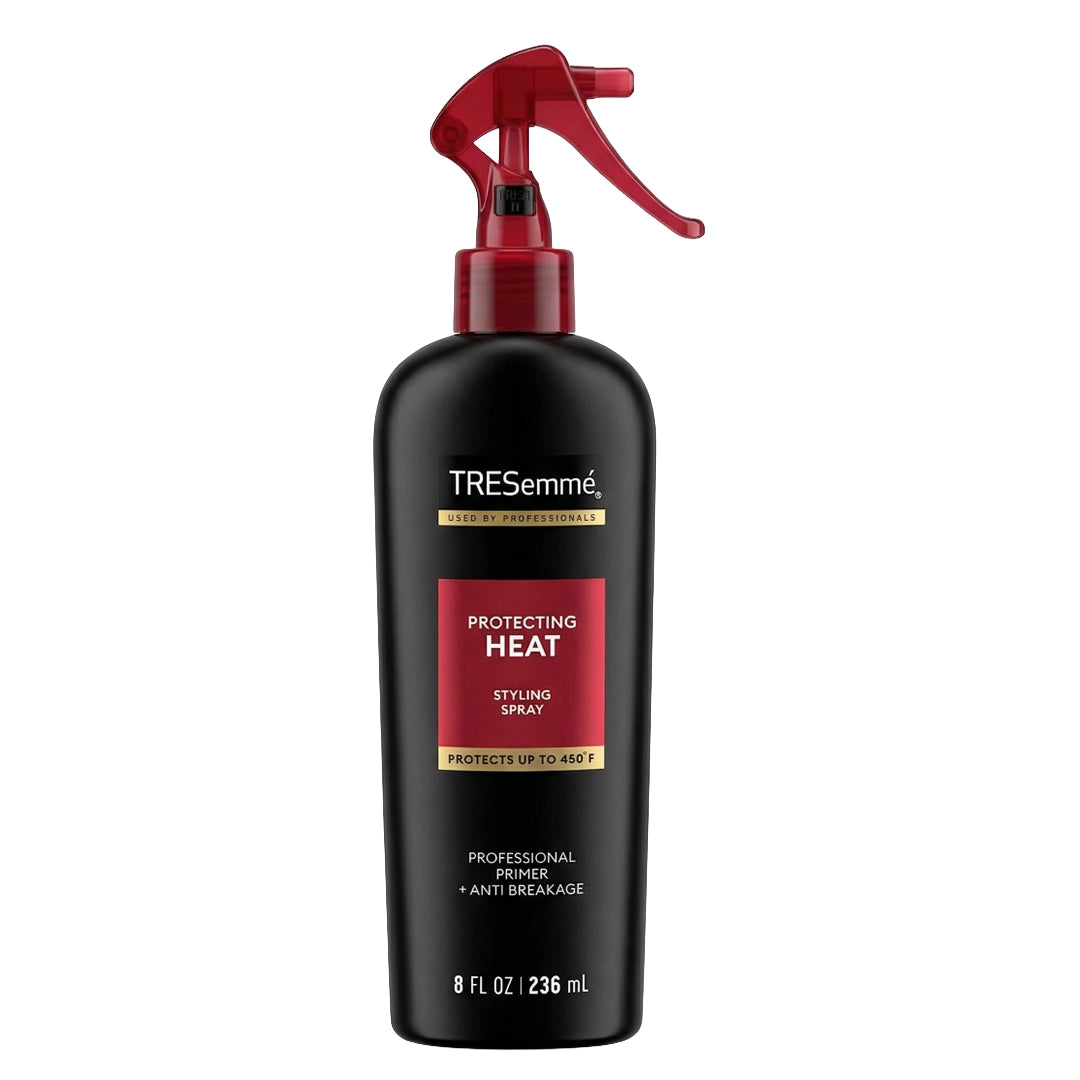
Regarding TRESemmé Protecting Heat Spray, the Dar Beauty product page explains that it can be sprayed evenly onto damp or dry hair before heat styling, focusing on the lengths and ends. TRESemmé's official instructions also recommend using it before heat styling.
TRESemmé Protecting Heat Spray: Is it suitable for heat styling?
If you are looking for a heat protectant for your hair before blow-drying and using a flat iron, TRESemmé Protecting Heat Spray in a 236 ml size is one of the options currently available at Dar Beauty.
The product page states that it is designed to protect against heat up to 450°F, equivalent to approximately 232°C, and describes it as having a lightweight formula with properties related to smoothness, shine, and frizz control. TRESemmé also explains that the product is intended to provide protection while using heat-styling tools.
It is important to treat 450°F as the level of protection advertised for this product, not as a temperature you should use on your hair. The appropriate tool temperature depends on your hair type and condition, and it is best to use the lowest temperature that achieves the desired result.
If your main goal is to protect your hair before styling, you can view TRESemmé Protecting Heat Spray at Dar Beauty to learn the product's current details.
What is the difference between heat protectant, serum, and hair oil?
Heat protectant, serum, and hair oil are not identical products, even though some formulations provide more than one benefit for the hair.
- Heat protectant: Its primary function is to prepare the hair for heat exposure according to the product's claims and instructions.
- Serum: It may focus on the appearance of smoothness or shine or on reducing frizz, and its function varies depending on its formulation.
- Hair oil: It is typically used to care for the hair and improve the appearance of dryness, smoothness, and shine, depending on the type and formulation of the oil.
Therefore, do not assume that any oil or serum can replace heat protectant simply because it makes the hair feel smoother.
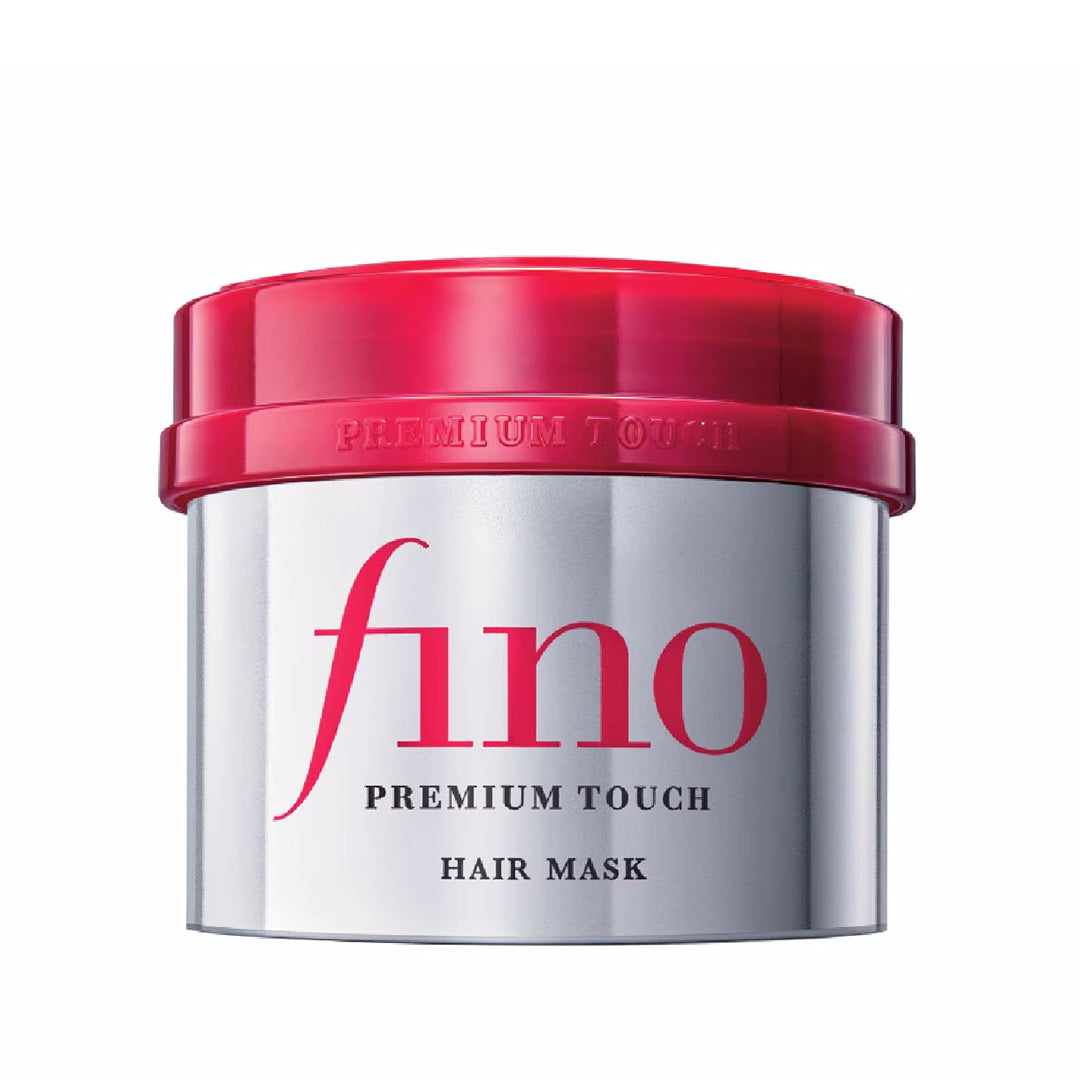
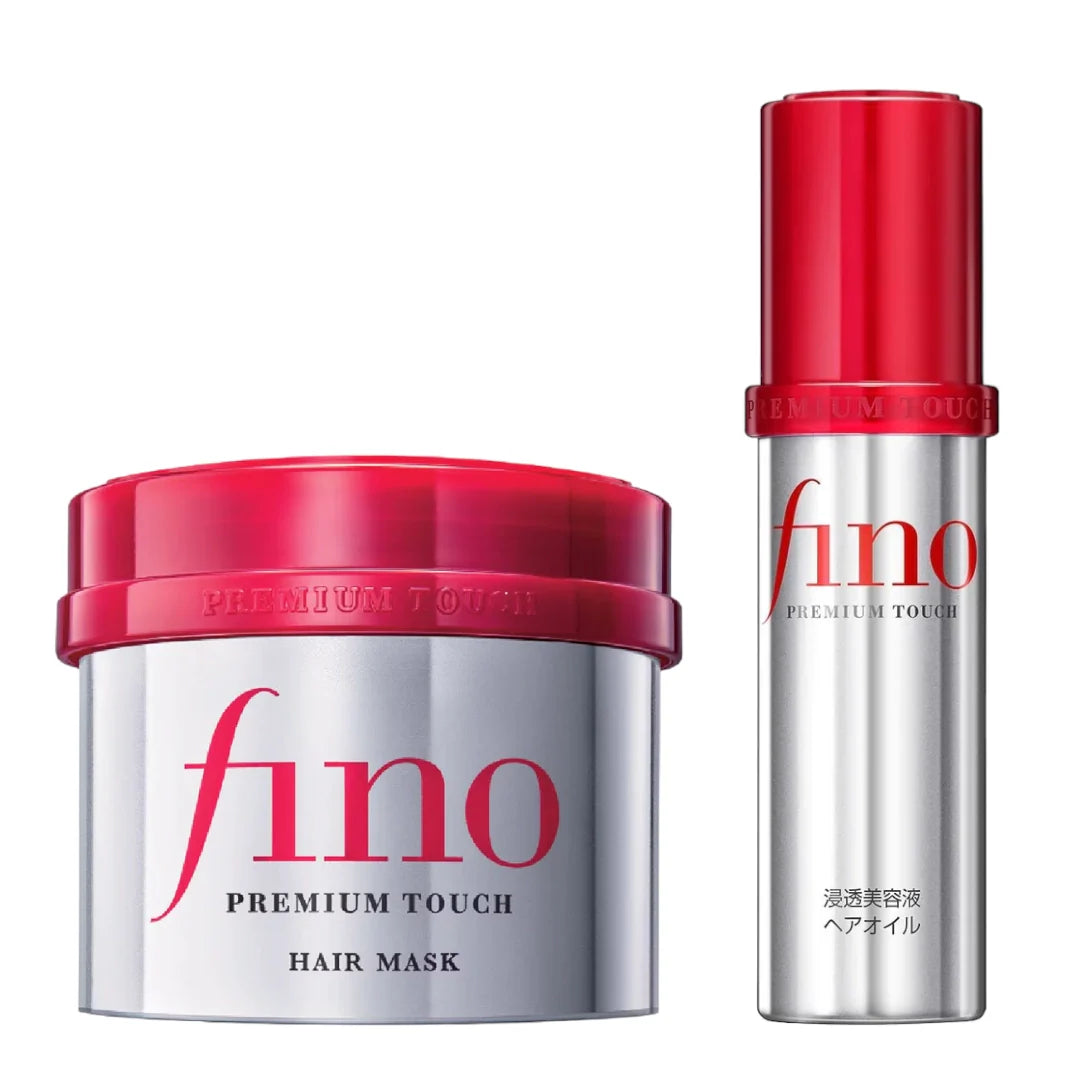
If you want to add a product for caring for the ends and improving your hair's final appearance, you can view Fino Premium Touch Hair Oil, then choose the product based on its purpose rather than automatically considering oil a substitute for heat protectant.
Common mistakes when using heat protectant
Using more heat than necessary
Turning the temperature up to the maximum does not mean you will get a better result. Choose the lowest temperature that achieves the desired styling.
Using the straightener on damp hair
If the hair straightener is intended for use on dry hair, do not use it on damp hair. Always follow the device's instructions.
Not distributing the product evenly
Applying the product to one section of the hair while leaving the rest of the lengths uncovered does not provide the intended benefit of the application method.
Using too much heat protectant
More is not always better. Follow the amount and spraying method recommended by the manufacturer.
The belief that heat protectant eliminates heat damage
Heat protectant is part of the protection, but it does not make excessive heat use harmless. The frequency of styling, temperature, and duration of exposure are all important factors.
Heat Protectant and Styling in Oman's Climate
If you live in Oman or move between hot and humid environments, you may notice that your hair becomes more prone to frizz or loses its style quickly.
And here, relying on the styling tool alone is not enough. Choosing products suited to your hair type, reducing unnecessary heat, and paying attention to moisture and care for the ends can help you maintain your hair's appearance.
You can also explore the hair care section at Dar Beauty to find the shampoos, masks, oils, serums, and heat protection products currently available.
Frequently asked questions about heat protectants for hair
Should I apply a heat protectant before blow-drying?
Yes, if the product is intended for use before heat styling, use it before blow-drying according to the instructions. You should also set the temperature appropriately and avoid keeping hot air on one area for too long.
Should I use a heat protectant before using a flat iron?
Yes, you can use a suitable heat protectant before using a flat iron if the product instructions allow it. The hair must be dry if the flat iron instructions require use on dry hair.
Does a heat protectant completely prevent hair damage?
No. A heat protectant helps protect the hair according to the product's properties, but it does not make the hair immune to the effects of heat. Therefore, reducing the temperature and the number of styling sessions remains important.
Can a heat protectant be used on dry hair?
Some products allow this, while others are intended for use only on damp hair. Check the product instructions before use. The Dar Beauty page states that TRESemmé Protecting Heat Spray can be used on damp or dry hair.
Can oil replace a heat protectant?
Not necessarily. Oil serves a different purpose from a heat protectant, so no oil should be considered a substitute for a product specifically designed for heat protection unless the manufacturer clearly states that it is.
What temperature does TRESemmé Protecting Heat Spray protect against?
The product page states protection up to 450°F, or approximately 232°C. This is the product's stated protection level, not a recommendation to use styling tools at this temperature.
Where can I buy a heat protectant for hair in Oman?
TRESemmé Protecting Heat Spray is available through Dar Beauty. You can also explore the hair care section to compare the available care products.
Conclusion
Choosing a heat protectant for hair before blow-drying and using a flat iron is not just about looking for a product labeled as providing heat protection; it also involves understanding how you use heat and choosing a formula suited to your hair's needs.
Always start by identifying the type of styling you use, then choose a product suitable for how you use it and apply it according to the instructions, while reducing the temperature and the number of times you pass the tool through your hair as much as possible.
If you are looking for a heat protectant spray that can be used with styling, you can learn more about TRESemmé Protecting Heat Spray, available at Dar Beauty, then choose what suits your hair type and styling method.