Cleanse & Exfoliate
 Serum & Treatments
 Moisturizing & Creams
 Masks & Peels
 Suncare

 Shampoo & Conditioner
 Hair Masks
 Scalp Care
 Hair Oil
 Hair Creams
 Hair Serums
 Gels & Waxes
 Heat Protection

 Body Wash
 Body Lotion
 Body Oil
 Body Scrub
 Hand & Foot Care
 Intimate Care
 Oral Care
 Deodorants

 Face
Face
 Lips
Lips
 Eyes
Eyes
 Makeup Tools
 Foundation
 Blush
Blush
 Mascara
 Lipstick

 Electrical
 Bath Loofahs
 Face Brushes
 Hair Brushes & Combs

 Skin Care Sets
 Hair Care Sets

 Korean Skin Care
 Korean Makeup
 Korean Hair Care
Intimate-area lightening cream: for hyperpigmentation and darkening
Darkening in sensitive areas and uneven skin tone are issues that lead many women to search for a lightening cream for sensitive areas, but choosing the right product does not depend on lightening strength alone. The cause of the hyperpigmentation, friction, hair removal, and the sensitivity of the area are all factors that should be taken into consideration.
In this guide from Dar Beauty, we explain what to look for when choosing a cream for areas prone to hyperpigmentation, which factors may increase darkening, and how to build a simple skincare routine. We also explain how to use Bioderma Pigmentbio Sensitive Areas as one of the options specifically designed for areas prone to uneven skin tone and friction.
What causes darkening in sensitive areas?
Before choosing any cream, it is helpful to know that a change in skin color in a particular area may be linked to more than one factor. Therefore, using a lightening cream alone may not be enough if the cause contributing to the hyperpigmentation persists.
Repeated friction
Skin rubbing against clothing or against other body areas can cause repeated irritation, which may affect the appearance of skin tone over time.
Hair removal
Shaving, waxing, or other hair-removal methods may cause irritation for some skin types, especially when the process is repeated or a method unsuitable for the skin is used.
Using unsuitable products
Fragrances, strong formulations, or excessive use of certain products may cause skin irritation. Therefore, it is best not to treat sensitive areas in the same way as more resilient body skin.
Over-exfoliation
Exfoliation may seem like a quick solution for getting rid of darkening, but overdoing it can increase skin sensitivity and irritation, which may make your skincare routine more difficult.
Therefore, the goal of a hyperpigmentation routine is not only to try to change the skin tone, but also to reduce factors that may contribute to the persistence of hyperpigmentation.
If your focus is specifically on underarm darkening, you can read Dar Beauty's article Does deodorant cause underarm darkening? to understand the relationship between irritation and products used daily.
How do you choose a lightening cream for sensitive areas?
When searching for a lightening cream for sensitive areas, do not let the word "lightening" be the only factor in your purchasing decision. More importantly, the product should be suitable for the nature of the area and address hyperpigmentation without adding factors that could increase irritation.
Search for a product:
- Designed for sensitive areas or areas prone to friction.
- It contains ingredients targeted at hyperpigmentation and uneven tone.
- It provides soothing or moisturizing care for the skin.
- It has clear usage instructions.
- It does not rely on exaggerated promises or unrealistic immediate results.
A product that suits the underarms, for example, may not automatically be suitable for use on all sensitive areas, so you should refer to the manufacturer's instructions before applying it.
What ingredients should you look for in a hyperpigmentation cream?
Formulas vary from one product to another, but when dealing with hyperpigmentation, it is helpful to look for a formula that combines tone care with maintaining skin comfort.
In products designed for hyperpigmentation, you may find ingredients that help address the formation or appearance of uneven tone, along with ingredients that support hydration and soothe the skin.
More important than combining several active ingredients is choosing a balanced formula that can be used consistently without causing irritation to the area.
Bioderma Pigmentbio for Sensitive Areas
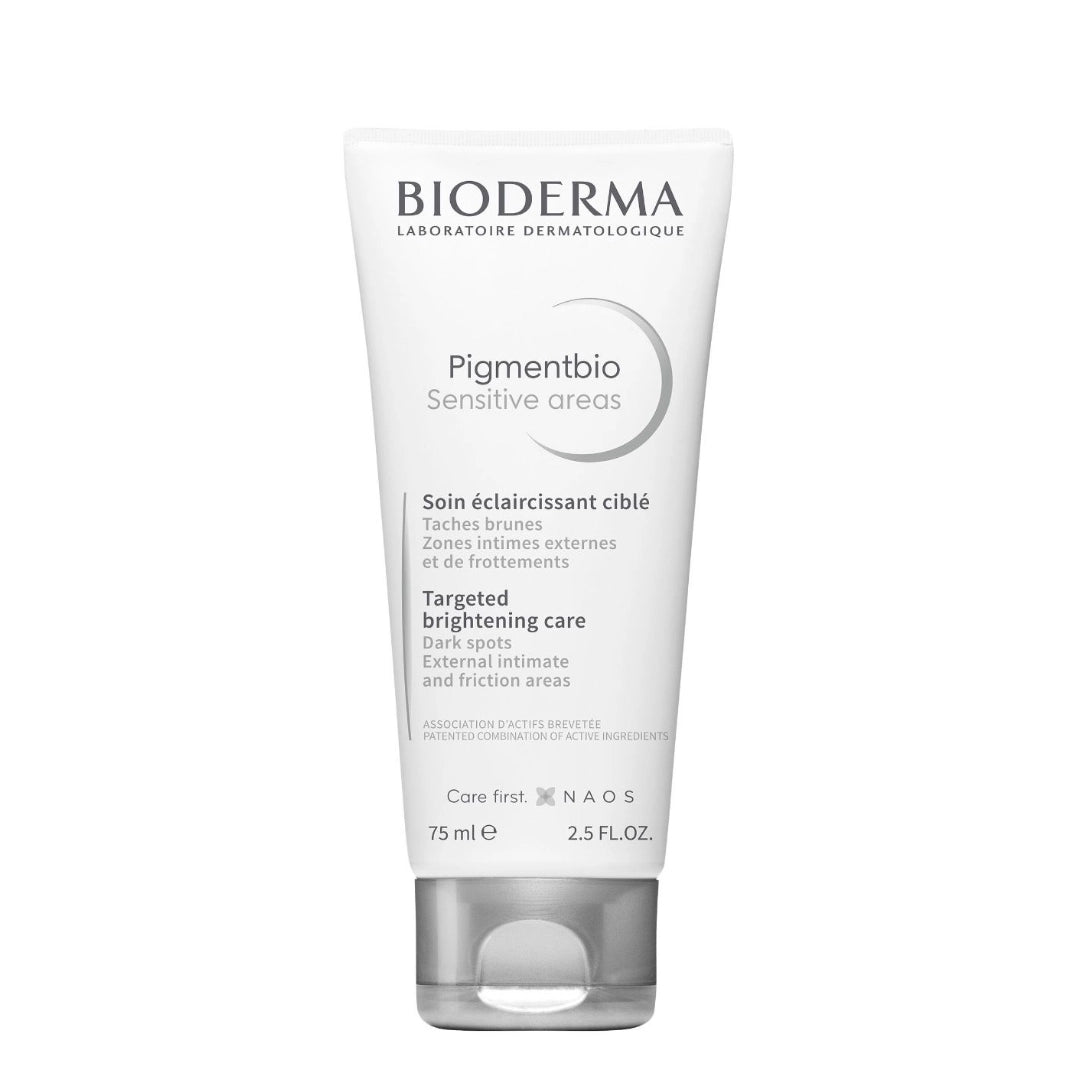
One product specifically designed for this type of need is Bioderma Pigmentbio Sensitive Areas, a cream intended to care for sensitive and external areas and areas prone to friction and uneven tone.
Bioderma explains that the product is intended to help even out the appearance of skin tone and reduce the appearance of hyperpigmentation, while providing moisturizing and soothing care for areas that may be more prone to irritation.
The 75 ml size is available at Dar Beauty. You can view the product details, ingredients, and directions for use on the Bioderma Pigmentbio Sensitive Areas page at Dar Beauty.
Where can Pigmentbio Sensitive Areas cream be used?
The product is not limited to use on one area, as it was designed to care for several areas prone to friction or changes in tone.
- Underarms.
- Outer bikini area.
- Inner thighs.
- Knees.
- Elbows.
- Other body areas prone to friction and uneven tone, according to the product instructions.
This makes it a practical option for those whose needs are not limited to just one area.
If you are looking for additional products to care for these areas, you can visit the intimate care section at Dar Beauty.
Can it be used after hair removal?
Hair removal is a factor worth considering when dealing with hyperpigmentation, especially if the skin becomes irritated after shaving or waxing.
According to Bioderma's instructions, Pigmentbio Sensitive Areas can be used directly after shaving or waxing, making it suitable for a skincare routine during periods when the skin is prone to changes in its appearance and tone.
However, if the skin is damaged, has wounds, or experiences severe burning after hair removal, it is best not to apply active products to the area until the skin calms down.
How to use a pigmentation cream for sensitive areas
Following the regular application method is more important than increasing the amount of product or using it more often than instructed.
1. Cleansing the area
Gently cleanse the area, then pat it dry without vigorous rubbing.
2. Applying an appropriate amount
Apply an appropriate amount of Pigmentbio Sensitive Areas to the area where uneven skin tone appears, then gently spread the cream until it is absorbed by the skin.
3. Frequency of use
The product can be used once or twice daily according to Bioderma's instructions.
4. Consistency
Do not try to judge the result after just a few days. Addressing pigmentation requires consistency, and the result varies depending on the cause of the darkening and the condition of the skin.
When do the results of a lightening cream for sensitive areas appear?
There is no single timeframe that applies to everyone, as pigmentation may be related to friction, hair removal, or other ongoing factors.
Bioderma's product data indicate a gradual improvement in the appearance of pigmentation over weeks of regular use, with clinical results measured after 28 and 56 days. These data do not mean that every user will achieve the same result within the same period.
Therefore, it is better to assess the change gradually rather than look for an immediate result, while paying attention to ongoing causes that may lead to darkening.
Mistakes to avoid when treating pigmentation
Overusing exfoliants
Using more than one exfoliant or acid at the same time may increase irritation instead of improving the appearance of the skin.
Constantly changing products
Switching between different products every few days makes it difficult to determine what suits your skin and may also increase the chance of irritation.
Ignoring friction
If friction continues daily, the color change may persist even when using a product designed for pigmentation.
Using products not intended for the area
Not every brightening cream intended for the face or body is automatically suitable for sensitive areas, so always check the area of use specified by the manufacturer.
Expecting an immediate result
Pigmentation usually requires a consistent routine and enough time to notice a change, so do not use larger amounts or more products in an attempt to speed up the result.
A simple routine for caring for areas prone to darkening
Your skincare routine can be simple instead of relying on a large number of products:
- Gently cleansing the area.
- Avoiding harsh scrubbing.
- Using a hair-removal method suitable for your skin.
- Applying the product designed for pigmentation as directed.
- Reducing friction as much as possible.
- Sticking to the routine and monitoring your skin's response.
For your overall body-care routine, you can explore Dar Beauty's body care collection and choose products according to your skin's needs.
Is a brightening cream alone enough?
Not always. If the darkening is related to friction, repeated irritation, or hair removal, using a cream designed for pigmentation while these factors continue may not produce the results you expect.
Therefore, think of your skincare routine as an integrated system: reducing irritation + reducing friction + choosing a suitable product + consistency.
If the pigmentation is severe, persistent, or appears suddenly or is accompanied by other skin symptoms, it is best to consult a dermatologist to determine the cause before relying on lightening products.
Frequently asked questions
What is the best cream for lightening sensitive areas?
There is no single cream suitable for everyone, because product selection depends on the cause of the pigmentation, skin sensitivity, and the area you want to care for. It is important to choose a product specifically intended for these areas and with clear usage instructions.
Is Bioderma Pigmentbio suitable for sensitive areas?
Yes, Pigmentbio Sensitive Areas was designed to care for external sensitive areas and areas prone to friction and uneven skin tone, according to the manufacturer's instructions.
Can it be used on the underarms?
Yes, the underarms are among the areas where the product can be used, especially when the goal is to care for the appearance of uneven tone and pigmentation.
Can it be used between the thighs?
It can be used on areas such as the inner thighs that are prone to friction, according to the product instructions.
Can it be used after hair removal?
Yes, Bioderma states that it can be used directly after shaving or waxing, but avoid applying any product to skin that is injured, cut, or severely irritated.
How often should Pigmentbio Sensitive Areas be used?
It can be used once or twice daily on the relevant area according to the product instructions.
When do the results of a lightening cream for sensitive areas appear?
The timeframe varies from person to person, and the company's data indicates gradual improvement over several weeks of regular use, rather than necessarily producing immediate results.
Can more than one lightening product be used at the same time?
Not necessarily, especially in sensitive areas. Combining several effective products may increase the likelihood of irritation, so it is better to start with a simple routine and monitor the skin's response.
Conclusion
Choosing a lightening cream for sensitive areas is not about trying to achieve the strongest possible effect, but rather about choosing a product suitable for the nature of the area while also addressing factors that may cause darkening to persist, such as friction, irritation, and hair removal.
One option specifically designed for this type of care is Bioderma Pigmentbio Sensitive Areas, which combines care for the appearance of pigmentation and uneven skin tone with skincare for areas prone to friction.
You can view Bioderma Pigmentbio Sensitive Areas at Dar Beauty to learn more about the product, its ingredients, and how to use it before purchasing.
You can also visit the intimate care section at Dar Beauty to explore products suitable for this routine.