Cleanse & Exfoliate
 Serum & Treatments
 Moisturizing & Creams
 Masks & Peels
 Suncare

 Shampoo & Conditioner
 Hair Masks
 Scalp Care
 Hair Oil
 Hair Creams
 Hair Serums
 Gels & Waxes
 Heat Protection

 Body Wash
 Body Lotion
 Body Oil
 Body Scrub
 Hand & Foot Care
 Intimate Care
 Oral Care
 Deodorants

 Face
Face
 Lips
Lips
 Eyes
Eyes
 Makeup Tools
 Foundation
 Blush
Blush
 Mascara
 Lipstick

 Electrical
 Bath Loofahs
 Face Brushes
 Hair Brushes & Combs

 Skin Care Sets
 Hair Care Sets

 Korean Skin Care
 Korean Makeup
 Korean Hair Care
Clay mask for blackheads and pores: How to use it
If blackheads or clogged pores make the skin look less clear, a clay mask may be a suitable option for addressing this concern, especially when the skin is oily or combination and needs cleansing to help reduce the buildup of oil and impurities.
However, choosing a clay mask depends on more than just its name; how it is used, how long it is left on the skin, and the area where it is applied, along with the skin’s condition itself, are all important factors for achieving balanced care without excessive drying or exfoliation.
In this guide from Dar Beauty, we’ll learn how to use a clay mask for blackheads and pores, when it is suitable, and how to benefit from the included brush with Medicube Zero Pore Blackhead Mud Mask + Brush.
Is a clay mask suitable for blackheads and pores?
Yes, a clay mask can be a practical option when the goal is caring for skin affected by excess oil or the buildup of impurities and clogged pores. The clays used in face masks absorb oils and impurities from the skin’s surface, which is why clay masks are popular as part of routines for oily and combination skin.
However, a clay mask should not be viewed as a definitive solution for blackheads. Blackheads are associated with the buildup of oil and dead skin cells inside the pores, so the skin needs regular, balanced care rather than relying on just one step.
How does a clay mask help clean pores?
The main idea behind a clay mask is to benefit from clay’s ability to absorb oil and impurities while it is on the skin. For this reason, you may notice that your skin looks cleaner and less shiny after removing the mask.
Formulas vary from one product to another. Some clay masks also contain exfoliating ingredients such as AHA, BHA, or PHA acids, so they should be used according to the product instructions and not randomly combined with numerous exfoliating products on the same day.
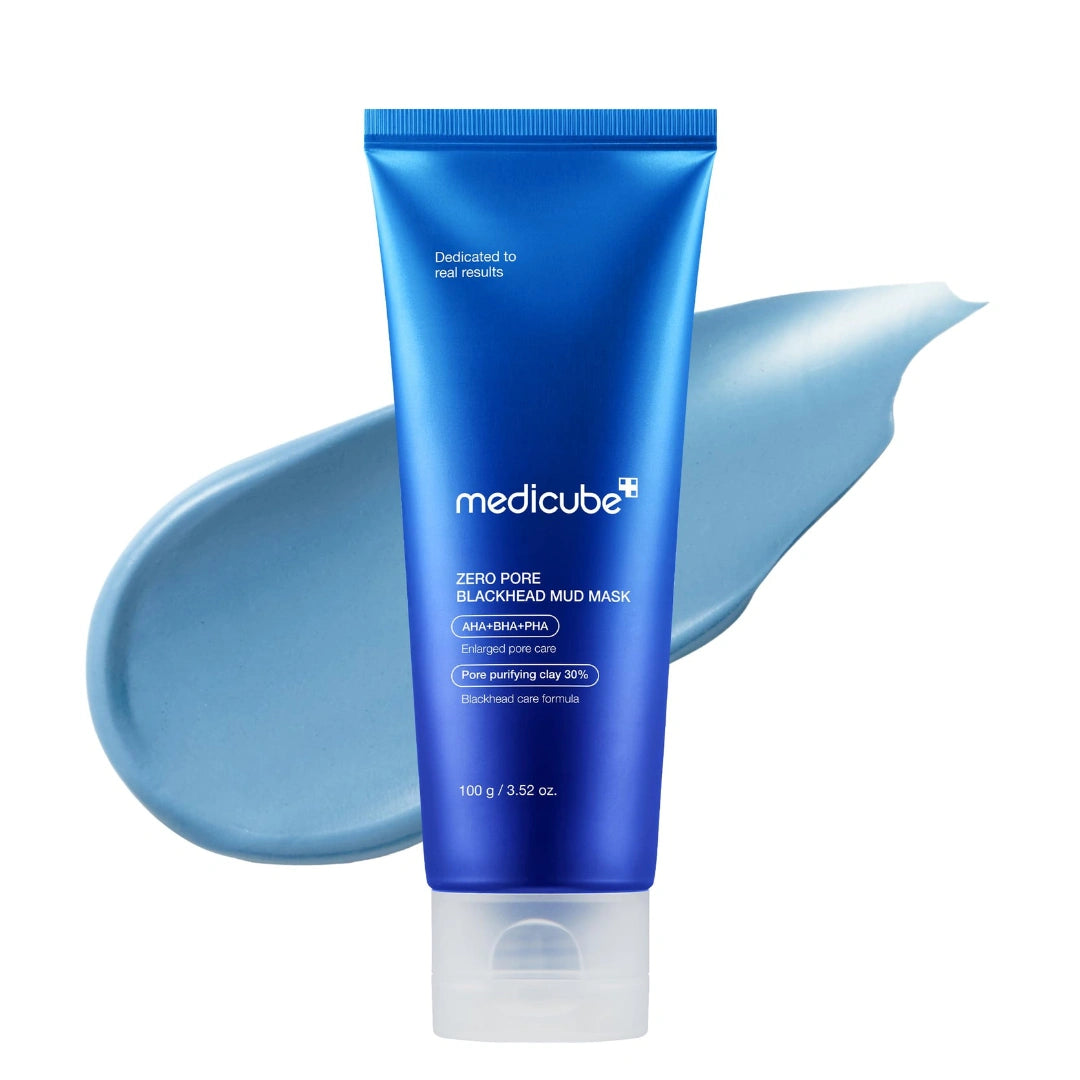
As for Medicube Zero Pore Blackhead Mud Mask, its formula contains five types of clay along with gluconolactone, salicylic acid, and glycolic acid, according to the ingredient list published on the product page.
Is a clay mask suitable for all skin types?
A clay mask can be used with different skin types, but the method and frequency of use should be tailored to the skin’s needs.
Oily and combination skin
A clay mask may be particularly suitable when the main concern is excess oil and clogged pores. You can focus on areas where shine is more noticeable, such as the nose, forehead, and chin.
Dry skin
If your skin is dry, do not leave the mask on longer than instructed in an attempt to achieve deeper cleansing. Overusing purifying masks may increase the feeling of dryness and tightness.
Sensitive skin
Always start cautiously, especially if the formula contains more than one exfoliating ingredient. It is best to test the product on a small area first and monitor your skin's response.
How do you use a clay mask correctly?
The correct method matters more than leaving the mask on your skin for as long as possible. For the Medicube Mask, the product instructions recommend applying it after cleansing to dry skin, leaving it until it dries, and then rinsing it with lukewarm water while avoiding the eye and mouth areas.
1. Cleanse your skin first
Start by cleansing your face and removing makeup, sunscreen, and surface impurities. Anua Heartleaf Pore Control Cleansing Oil can be a suitable cleansing step when you need to remove makeup or sunscreen before water-based cleansing.
2. Dry your skin thoroughly
Apply the clay mask to dry skin if the product instructions state this. This step is important with the Medicube Zero Pore Mask because the product page recommends using it on completely dry skin.
3. Apply an appropriate layer
Apply an even layer of the mask to the areas that need care, avoiding the eyes and lips. You do not need to apply a very thick layer for better results.
4. Leave it on for the specified time
With the Medicube Zero Pore Mask, Dar Beauty's instructions recommend leaving it on for 3–5 minutes until it dries, then rinsing it thoroughly with lukewarm water. Do not leave it on longer to increase its effectiveness.
5. Rinse your skin gently
Use lukewarm water to remove the mask without vigorous rubbing. Then pat your skin dry with a clean, soft towel.
How do you use a pore-cleansing brush with the mask?
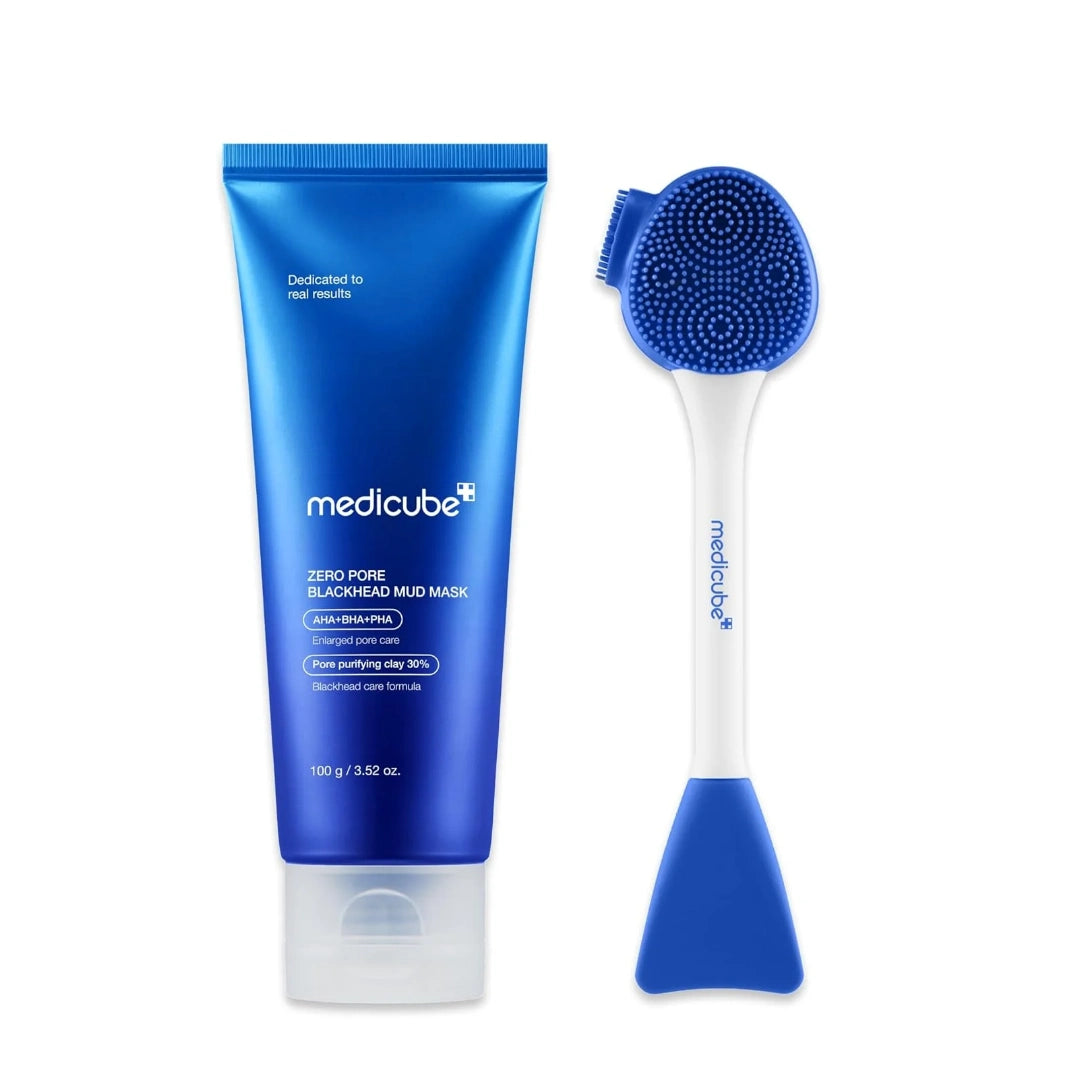
An additional benefit of the Medicube Zero Pore Blackhead Mud Mask + Brush is the inclusion of a multi-purpose silicone brush in the set. According to the product instructions, the brush can be used before the mask with a suitable cleanser to help cleanse the skin and areas where oil and impurities accumulate.
However, the presence of the brush does not mean you need to press hard on your skin or scrub your nose continuously. When using any cleansing tool, use gentle movements, especially if your skin is sensitive or prone to redness.
Afterward, wash the brush head with warm water and gentle soap, and let it dry thoroughly before storing it, according to the kit instructions.
Can I use a clay mask only on my nose?
Yes. If blackheads and excess oil are concentrated around the nose or T-zone, you do not have to apply the mask to your entire face.
You can focus on:
- Nose.
- Forehead.
- Chin.
- Areas where shine or oil buildup is clearly visible.
This approach can be practical, especially if some areas of the face are drier than others.
How often should a clay mask be used?
There is no need to use a clay mask daily. The appropriate frequency depends on the product's formula, skin type, and tolerance.
The Medicube mask page states that it can be used once to twice a week for oily and combination skin, and once a week for sensitive or dry skin.
If you experience noticeable dryness, tightness, or irritation after use, reduce the frequency and avoid combining it with other strong exfoliants on the same day.
Does a clay mask shrink pores?
Pores are a natural part of the skin, and their size cannot be permanently changed or closed using a mask. However, when oil and impurities accumulate inside the pores, they may appear more noticeable.
Therefore, cleansing the skin, controlling oil, and preventing dead skin cell buildup may help improve the appearance of pores, but it is best not to treat any mask as a way to permanently shrink pores.
To better understand pore care, you can read Darbeauty's article about pore care and choosing a suitable toner for enlarged pores.
What makes the Medicube Zero Pore Blackhead Mud Mask + Brush stand out?
If you are specifically looking for a clay mask for blackheads with a cleansing tool, the Medicube Zero Pore Blackhead Mud Mask + Brush combines two products in one set:
- The Zero Pore Blackhead Mud Mask in a 100 g size.
- The Medicube Multi Blackhead Pore Brush silicone brush.
The mask's formula targets excess oil, impurities, and clogged pores, while the brush provides several specialized heads for different types of cleansing and caring for areas prone to oil buildup or blackheads.
If you are comparing more than one mask, you can browse the Darbeauty Masks and Peels Collection and compare products based on your skin type and needs.
Common mistakes when using a clay mask
Leaving the mask on until it becomes extremely dry
A dried mask does not mean that the skin is getting a better cleanse. Follow the time specified on the product.
Applying the mask to irritated skin
If the skin is irritated or noticeably red, it is best to postpone using the mask until the skin calms down.
Aggressive scrubbing to remove blackheads
Do not try to remove blackheads by scrubbing or applying strong pressure after the mask. Gentle care is better than trying to extract them by force.
Using several exfoliants on the same day
If the mask contains exfoliating ingredients, do not add a range of strong exfoliants on the same day unnecessarily, as this may increase dryness or irritation.
Neglecting hydration after the mask
Even oily skin needs hydration. The goal of pore care is not to dry out the skin completely, but to maintain its balance.
What do you use after a clay mask?
After rinsing off the mask and gently patting your skin dry, focus on simple products that provide hydration and comfort.
If you need to cleanse your skin before using the mask, you can also use Anua Heartleaf Pore Control Cleansing Oil or choose a cleanser suited to your skin type from the Cleansers at Dar Beauty section.
Using a clay mask does not mean you need to add several active products immediately afterward. The simpler and more compatible your post-mask routine is with your skin’s needs, the easier it will be to determine what truly works for you.
Frequently asked questions about clay masks for blackheads and pores
Does a clay mask remove blackheads?
A clay mask can help cleanse the skin and absorb oil and impurities, and may improve the appearance of areas where blackheads appear. However, it is not a permanent solution for blackheads, so the skin needs consistent, appropriate care.
Should I use a clay mask before or after cleansing my face?
Use it after cleansing your face, and preferably follow the product instructions regarding whether the skin should be dry or damp. For Medicube Zero Pore, the instructions state that it should be used after cleansing on completely dry skin.
Can I use a clay mask only on my nose?
Yes, you can apply it to the nose or T-zone if these areas are most prone to oiliness and blackheads.
Can I use a pore-cleansing brush with a clay mask?
You can use the brush included with the Medicube set as a cleansing step before the mask, making sure to use gentle motions and avoid pressing on the skin.
How many minutes should I leave the Medicube Zero Pore mask on my face?
According to the product page instructions on Dar Beauty, leave the mask on for 3–5 minutes until it dries, then rinse with lukewarm water.
Is a clay mask suitable for sensitive skin?
It may suit some sensitive skin types, but tolerance varies from person to person. Start with infrequent use, patch-test the product on a small area first, and stop using it if noticeable irritation occurs.
Conclusion
Choosing a clay mask for blackheads and pores depends not only on its cleansing power, but also on how well the product suits your skin type, as well as how and how often you use it.
If your main concerns are excess oil, clogged pores, and blackheads, a clay mask may be a useful addition to your skincare routine, provided you use it moderately and avoid over-drying or over-exfoliating the skin.
If you’re looking for an option that combines a clay mask and a pore-cleansing brush, you can check out Medicube Zero Pore Blackhead Mud Mask + Brush and choose the application method that suits your skin’s needs.